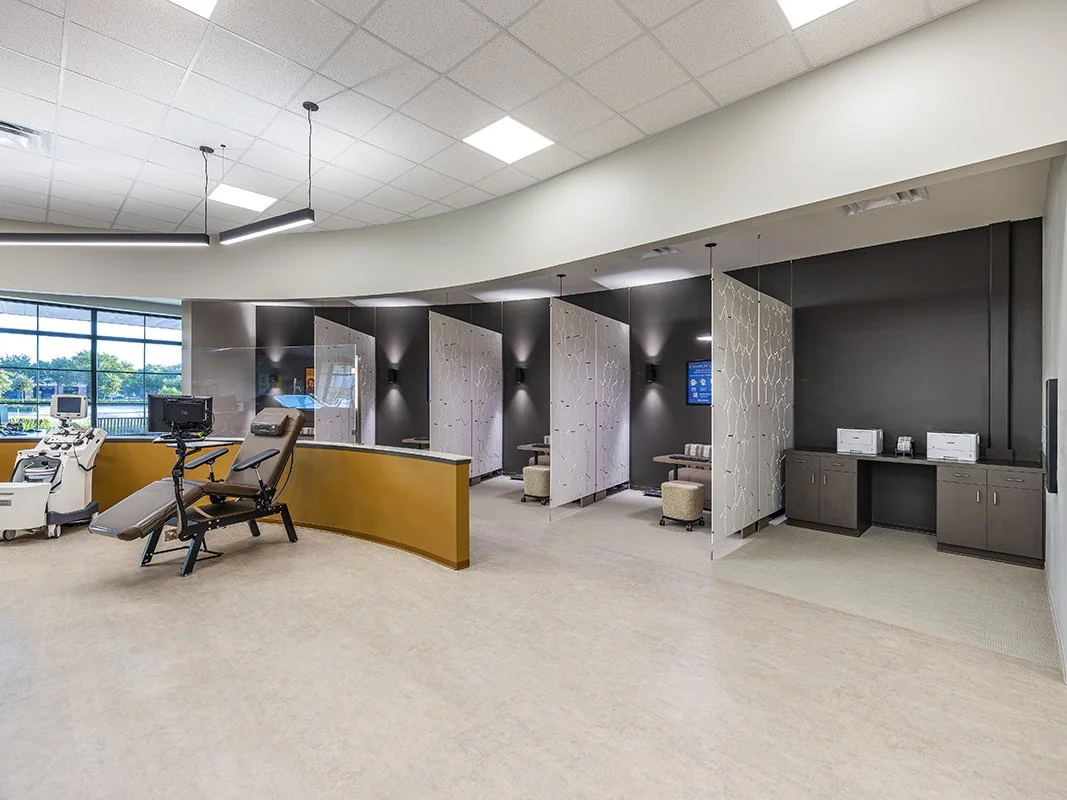
When people think about a blood donation center, the first words that come to mind probably aren't warm, welcoming, relaxing, or hospitality-inspired.
Creative Furnishings and Gulf Coast Blood Center set out to change that.
Rather than designing another traditionally clinical environment, Gulf Coast Blood Center wanted to explore a new approach—one that felt more comfortable and inviting while still meeting the functional demands of a medical facility.
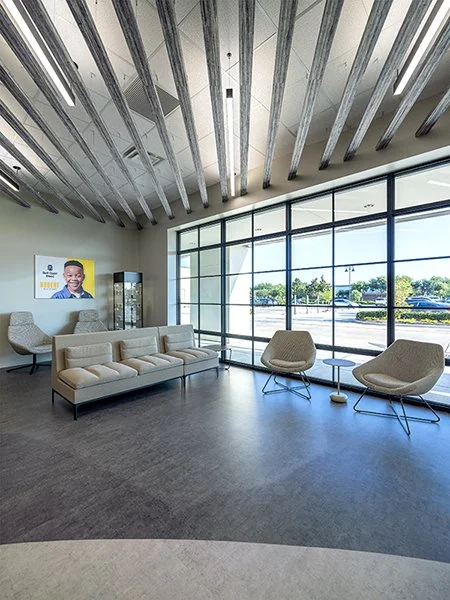
Creative Furnishings partnered with the Blood Center to develop a new design scheme that balances medical functionality with the warmth and comfort of hospitality design. The result is an open, modern environment with softer materials, residentially inspired furniture, thoughtful acoustics and carefully selected finishes that create a very different experience for donors.
Most importantly, the project established a new design standard that can be carried forward into future Gulf Coast Blood Center facilities.
Starting With a Different Vision
The design conversation began with a simple question: What if a blood donation center didn't have to feel like a medical facility?
Gulf Coast Blood Center wanted something new - an environment that felt softer, warmer and even a little more like a spa or hospitality setting.
Creative Furnishings developed two initial design directions. One incorporated peach and soft green tones, while the other explored a more sophisticated neutral palette of beige, cream and subtle rust. The team ultimately selected the neutral scheme, creating a timeless foundation that could be adapted across future facilities.
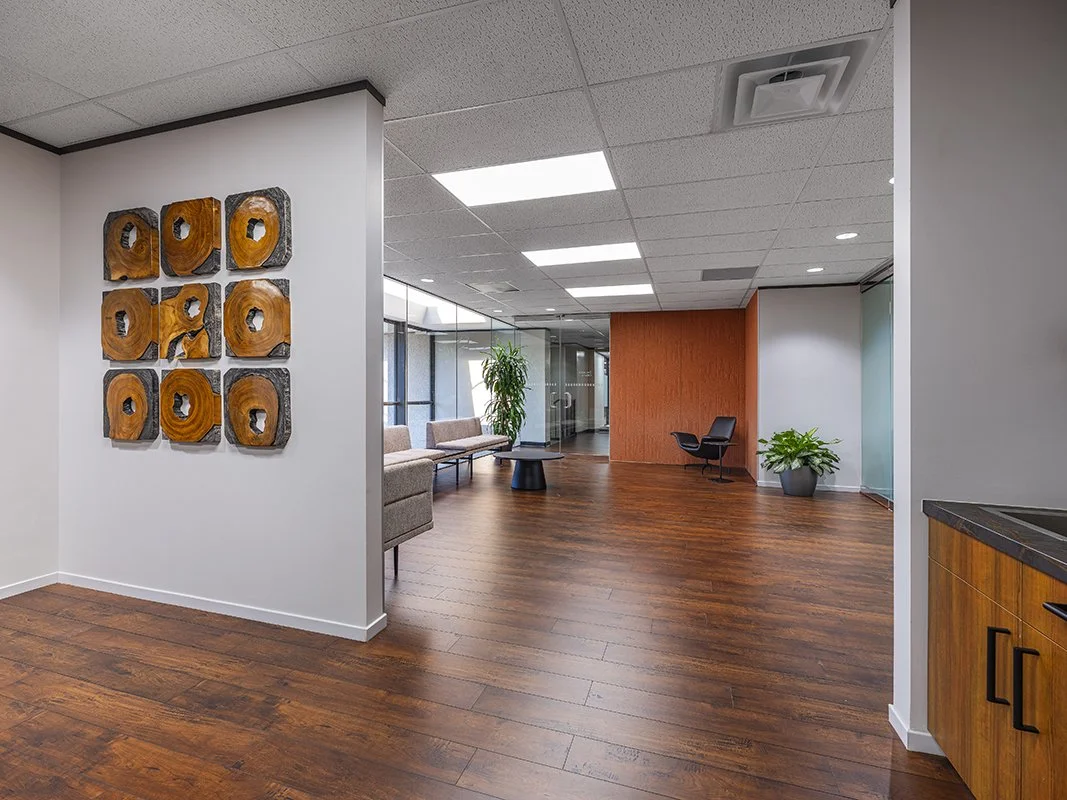
The neutrality wasn't about making the space bland. Instead, it created an opportunity to introduce strong architectural colors, texture and artwork in intentional ways.
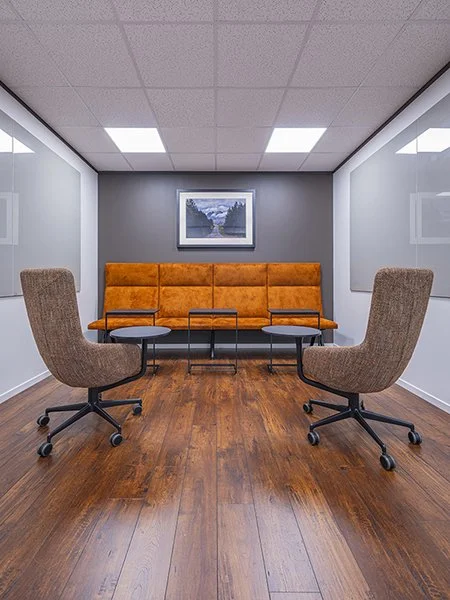
Dark tungsten walls provide contrast and make the artwork stand out. Soft suede creates a warm neutral backdrop, while gold accents appear on the half-height walls. Flooring and upholstery stay relatively quiet, allowing these stronger elements to have more impact.
The result is a palette that feels contemporary and distinctive without becoming tied to a particular design trend.
An Open Concept That Puts People First
One of the biggest departures from a traditional medical environment is the facility's open configuration. Instead of a series of enclosed rooms and corridors, the space is designed with clear sightlines throughout. From the front of the facility, staff can see into the screening areas, seating areas and donor spaces.
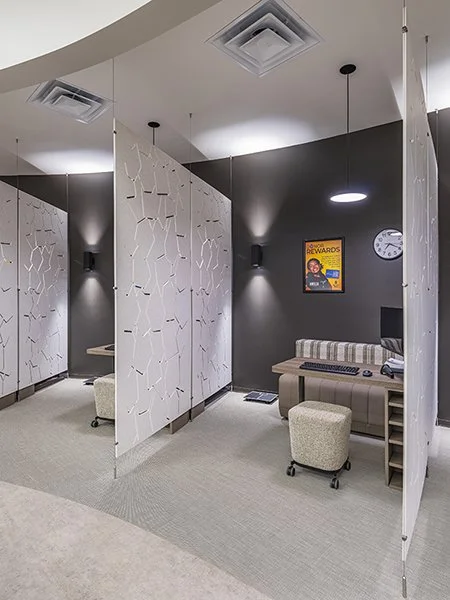
The screening rooms don't rely on conventional doors and enclosed walls. Instead, acoustical hanging panels create separation and privacy while maintaining the open feel of the space. Curved configurations divide the screening areas without creating a maze of enclosed rooms.
The approach allows staff to maintain visibility while giving donors a greater sense of openness and ease.
Only select spaces, such as private offices and support areas, are fully enclosed.
Replacing the Traditional Screening Room With a Hospitality-Inspired Experience
Perhaps the most noticeable change is in the screening areas. Previously, the experience was more typical of a medical office: a desk, an office chair and a place for a donor to sit while providing their medical history.
The new approach feels much more like a living space.
An armless sofa in a comfortable, distinctive fabric replaces the traditional desk-and-chair configuration. A small pull-up stool on casters provides flexibility for staff, while medical equipment remains integrated into the space. The changes are subtle, but tangible.
Furniture communicates how a space is meant to feel. By moving away from conventional office furniture and toward residentially inspired pieces, Creative Furnishings helped transform a functional screening area into something that feels more comfortable and approachable.
The goal is to make donors feel like guests rather than patients. And that hospitality mindset extends beyond furniture.
The team also explored amenities such as massage chairs, refreshments and educational areas where donors can learn more about blood donation and how their contributions are used. These elements reinforce the idea that the donor experience should be about more than simply moving someone through a clinical process.
Materials That Balance Warmth, Durability and Performance
Creating a softer aesthetic shouldn’t mean sacrificing durability. Blood donation centers are high-traffic environments, so every finish needs to perform.
LVT Instead of Traditional Hardwood
Flooring was a leading part of that conversation. While hardwood can create a beautiful, upscale appearance, it often isn't the most practical choice for a high-traffic healthcare environment. Luxury vinyl tile, or LVT, offers greater durability, easier maintenance and significantly more flexibility in terms of patterns and finishes.
For the Blood Center, the team selected a soft stone-inspired LVT rather than a traditional wood-look product. The result provides the warmth and visual interest of a finished flooring surface without making the space feel overly residential.
Another advantage is installation: LVT products can transition cleanly to adjacent materials without the need for a traditional reducer, creating a more seamless floor plane.
For spaces where a true wood appearance is appropriate, such as executive suites, engineered wood can provide another option. Today's engineered products can be highly water resistant and offer the appearance of hardwood at a lesser price point.
The lesson is that the best flooring isn't necessarily the most luxurious material. It's the material that best matches the way the space will actually be used.
A Warm, Timeless Material Palette
Creative Furnishings established a predominantly neutral foundation through flooring, upholstery and larger furniture pieces, creating a timeless backdrop that can evolve over time. Color can be layered in through artwork and accessories without requiring a complete redesign.
Texture adds warmth and visual interest throughout the space. A wood-grain-inspired ceiling treatment extends into the lobby, while sculptural suspended panels provide acoustic control and separation between screening areas. Performance-driven materials, including lightweight, easy-to-clean Connectics carpet made with recycled water materials, further balance aesthetics with durability.
The result is a palette that feels soft, layered and hospitality-inspired rather than clinical, while providing the flexibility and performance for Gulf Coast Blood Center facilities.
Custom Details Through COM
Customization was another important part of creating a distinctive environment.
Creative Furnishings frequently works with COM - Customer's Own Material - which allows a client or designer to select a specific fabric that is then sent to the furniture manufacturer for production.
It offers considerably more design flexibility, but it also requires more coordination.
For this project, fabrics were sent to manufacturers for testing and approval before production. That process can add time, but it gives designers significantly more control over the finished environment.
It's one of the ways Creative Furnishings can help a project move beyond an off-the-shelf furniture package and create something that feels intentionally designed for the client.
Creating a Standard, Not Just a Single Location
Perhaps the most important outcome of the project is that the design wasn't developed as a one-off. Creative Furnishings worked with Gulf Coast Blood Center to establish a repeatable design language for future facilities.
The standard combines:
An open, highly visible floor plan
Hospitality-inspired furniture
Warm, neutral finishes
Durable, easy-to-maintain flooring
Acoustical separation without traditional enclosed rooms
An intentional color palette
Flexible artwork and accessories
Comfortable donor seating and screening environments
Dedicated support, storage and private office areas
The Sienna location demonstrates how that design direction can come together in a finished facility, creating an environment that feels distinctly different from the traditional clinical model.
Designing a Better Experience
A blood donation center still has to function as a healthcare environment. Medical best practices, equipment, infection control, privacy, durability and staff workflows can't take a back seat to aesthetics.
But this project demonstrates that functional doesn't have to mean clinical-looking.
By combining the performance requirements of a medical facility with the comfort, warmth and human scale of hospitality design, Creative Furnishings and Gulf Coast Blood Center created a space that feels more welcoming to the people who matter most: the donors.
And because the approach was developed as a design standard rather than a single-location concept, that experience can continue to evolve across future Gulf Coast Blood Center facilities.
The result is a new kind of blood center - one designed not just around the process of donation, but around the experience of the person walking through the door.