
3 Easy Ways to Modernize Your Office
Refreshing your office doesn’t have to mean a full renovation. In many cases, a few strategic upgrades can dramatically improve how your space looks, feels, and performs. From lighting to ceilings to flooring, here are three high-impact ways to bring a more modern, polished feel into your workplace, without overcomplicating the process or overspending your budget.
1. Upgrade Your Lighting for Comfort and Clarity

Lighting is one of the most overlooked - but most powerful - ways to modernize an office. Swapping outdated fluorescent fixtures for LED lighting instantly elevates the look of a space while improving energy efficiency and employee comfort.
LED lighting provides more consistent illumination, reduces eye strain, and creates a brighter, more inviting atmosphere. It’s especially impactful in spaces like restrooms, where replacing overhead lighting with fixtures mounted beside or above mirrors creates a cleaner, more intentional design. Traditional ceiling “can” lights in these areas often produce harsh shadows and uneven light, making them less effective both functionally and aesthetically.
A thoughtful lighting plan doesn’t just modernize your space; it enhances how people experience it every day.
2. Refresh Your Ceilings for a Cleaner, More Contemporary Look

Ceilings can quietly date an office faster than almost anything else. Yellowed, stained, or heavily gridded ceiling tiles can make even a well-designed space feel tired.
Today’s ceiling options offer a range of modern alternatives:
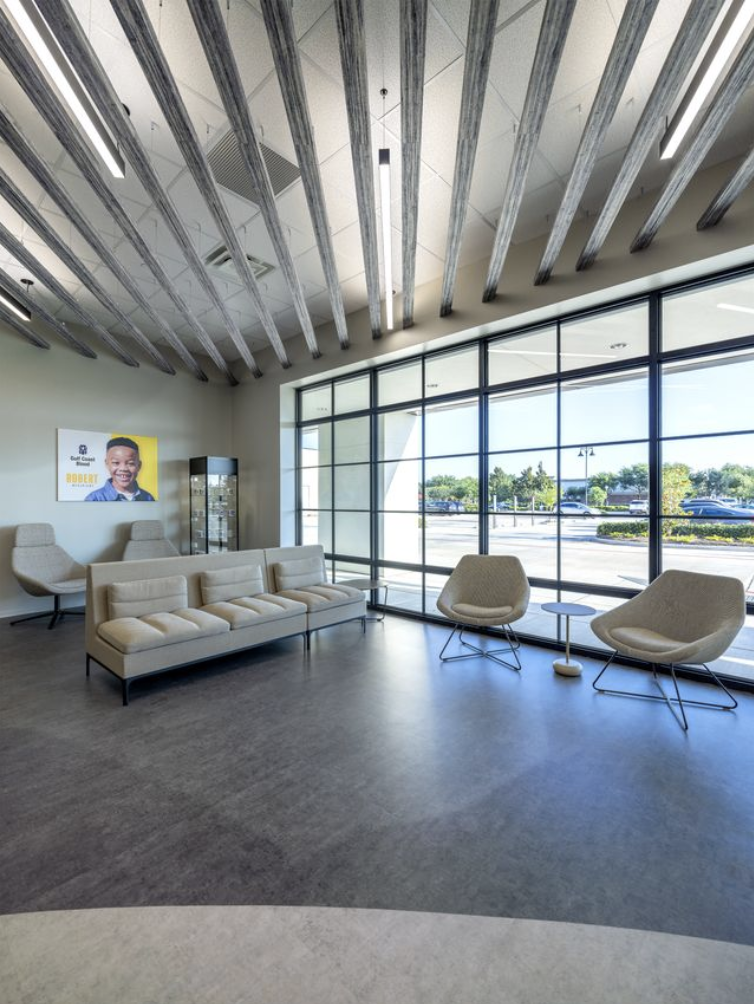
Smooth, flush ceiling tiles create a more seamless, continuous appearance compared to traditional dropped tiles.
High-performance acoustic tiles improve sound control while maintaining a clean, updated look.
Acoustical felt panels or baffles (available in a wide range of colors) add both visual interest and sound absorption, especially in open or glass-heavy environments.
Acoustic solutions are particularly valuable in offices with hard surfaces like glass walls and concrete or tile floors. Wall-mounted panels or suspended ceiling elements can reduce echo and improve overall comfort without sacrificing style. These elements are no longer purely functional - they’re becoming a key part of modern office design.
3. Rethink Flooring for Durability, Style, and Variety
Flooring sets the foundation for your entire space and a well-planned flooring strategy balances durability, budget, and design.
A few key considerations:
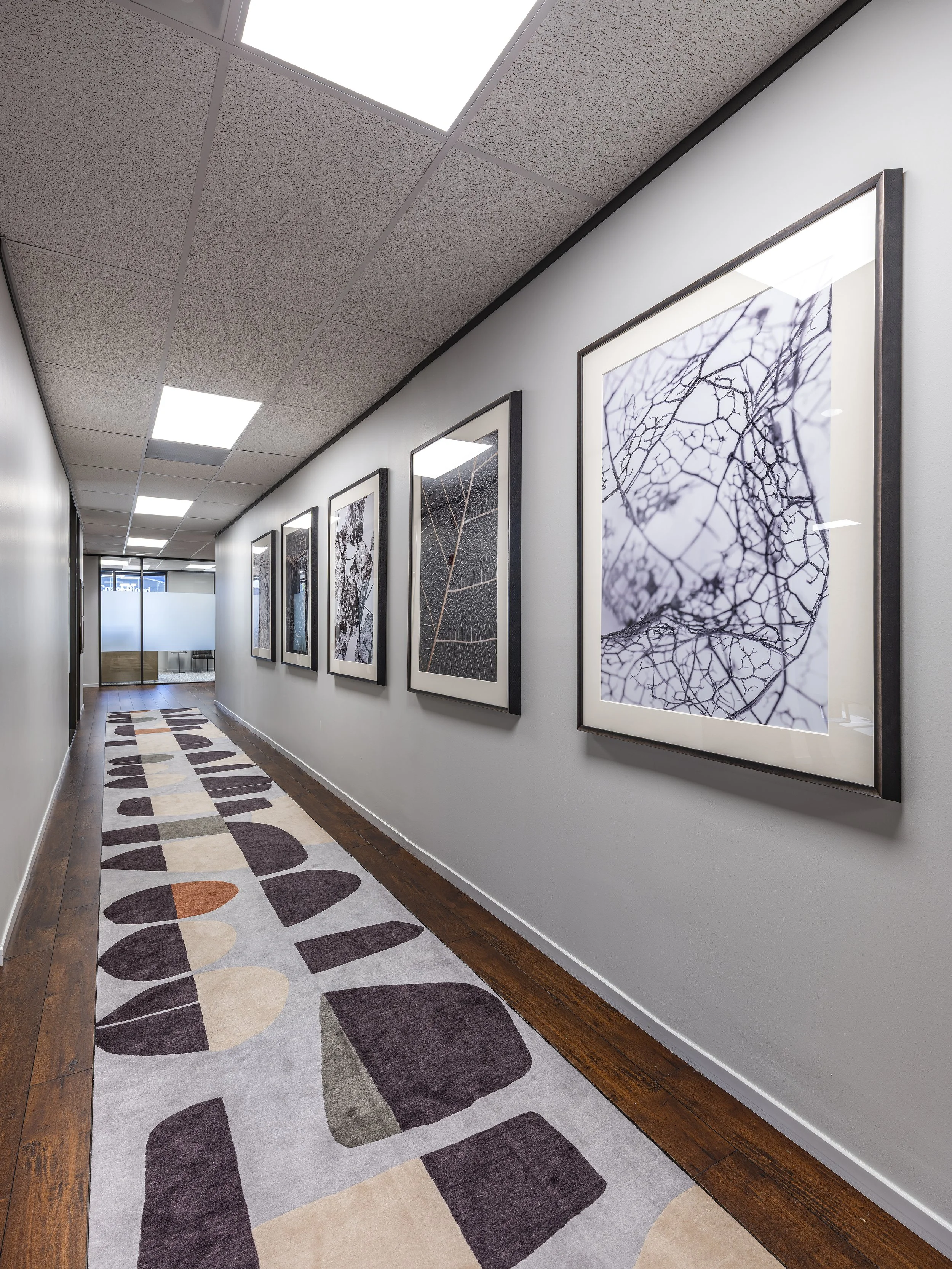
Start with function. High-traffic areas benefit from durable materials like luxury vinyl tile (LVT), which offers a wide range of patterns and colors while holding up better than traditional wood.
Layer in variety. Using different flooring types, such as LVT in lobbies, carpet in work areas, and upgraded finishes in executive spaces, creates visual interest and helps define different zones within the office.
Choose carpet strategically. It’s often easier to match paint and finishes to a selected carpet than the other way around, so starting here can simplify the design process.
For higher-end spaces, materials like engineered wood or woven laminate flooring offer the look of natural wood with improved durability and water resistance, making them a practical option for executive suites or specialty areas.
Rugs can also enhance a space, particularly in lounge or executive settings, but they must be planned carefully. To avoid safety risks, inset rugs that sit flush with surrounding flooring are often the best solution in high-traffic environments. Loose rugs can work well in lower-traffic areas like private offices, especially under lounge seating.
Bringing It All Together
Modernizing your office doesn’t require a complete overhaul. By focusing on lighting, ceilings, and flooring, you can create a space that feels more current, functions better, and leaves a stronger impression on employees and visitors alike.
The key is thoughtful selection, balancing aesthetics, performance, and budget to achieve a cohesive, elevated result.